
Her jawline is as sharp as a dagger, and her ski-slope nose inspires the “after” photos that pepper a plastic surgeon’s Instagram. Liliana Bogart is cool, and she knows it. She is late for our interview, a Zoom scheduled after she missed our in-person meeting, but that is neither here nor there. Clothed in nothing but a tight cropped t-shirt and a stringy pair of black underwear, her ensemble for this virtual meeting is risqué, but that is also neither here nor there.
Bogart is exhausted from New York Fashion Week. Her schedule was light this season—with one show to walk and one to attend—so she spent most of her time networking at various late-night events. “I was going to some after parties to be around people in the industry and make more connections,” she explains (and suddenly it became clear why she missed our original appointment). “In New York it’s definitely all about networking.”
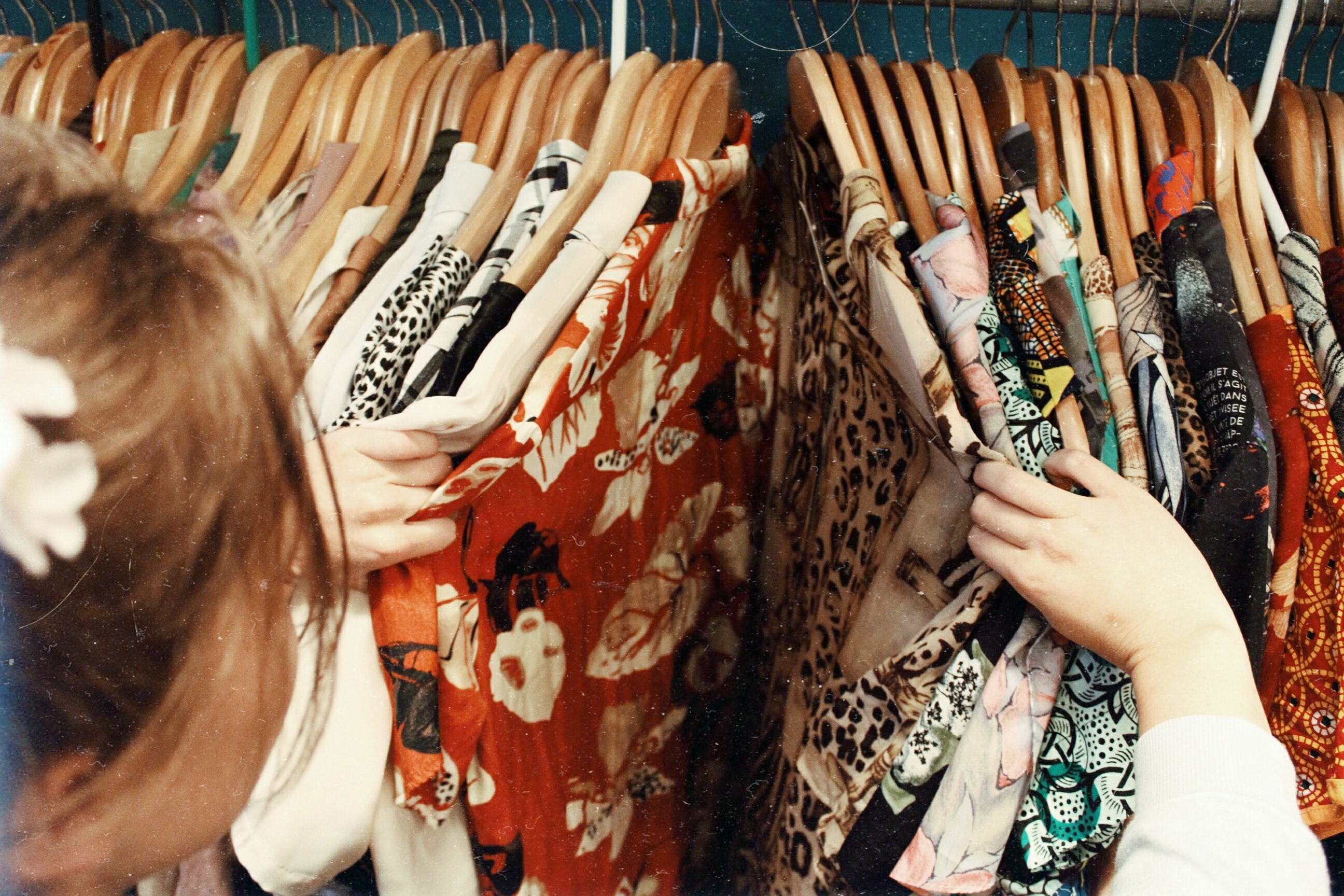
While the happenings of an on-duty model are undoubtedly fascinating, Bogart’s ventures off the runway are far more intriguing. As the owner of the vintage resale shop “Not Original Thrifting,” she possesses a passion for sustainability that she longs to share with others. Her secondhand store—which launched on the social shopping platform, Depop, last year—is the amalgamation of her own used clothing items and a few fashionable finds from the local thrift. However, what started out as a light-hearted side project in the thick of quarantine quickly evolved into something infinitely bigger than she could have ever imagined. Before the pandemic, Bogart didn’t truly understand the havoc the fashion industry could wreak on the environment. With 85 percent of textiles ending up in landfills each year, it’s unsurprising that clothing production accounts for approximately 10 percent of global carbon emissions. After doing a bit of research, Bogart realized her habit of secondhand shopping wasn’t just some silly hobby—it was a facilitator of change.
While Not Original Thrifting helps Bogart feel like part of the solution, outside the shop she often finds herself faced with two ethical dilemmas: the first relatively harmless and the second rather sinister. As a young model, Liliana Bogart rarely—if ever—has a say in the brands she shoots with and walks for. And while she herself values reducing her environmental footprint, many of the companies she works with cannot say the same. “It’s not that I don’t value sustainability when I’m walking for brands that might not be the most sustainable,” she clarifies, “But for my modeling career I’m trying to get myself out there more and I need the exposure.” She’s adamant it won’t be this way forever. One day she hopes to build a platform powerful enough to allow her the luxury to pick and choose who she partners with. But for now, she must do what she can to get by.
The second dilemma Bogart faces is slightly more insidious: Is the act of buying inexpensive clothing from thrift stores and reselling for profit morally sound? The so-called “gentrification” of secondhand shops has prompted countless debates in recent years. While thrift stores were once characterized by an abundance of affordable fashion options for low-income communities, they are now becoming increasingly picked-over and pricey on behalf of Depop resellers. Some view the practice as profiteering, others as a mere means to an end—but Bogart shares a different perspective. “I know my audience,” she says. “When I go thrifting, I don’t think I’m choosing items that the general population would wear.” She goes on to explain that she specifically searches for “high fashion” pieces that “thrifty, Gen Z” individuals like herself would wear and not clothing lower income individuals and families “would actually choose for themselves.”
This was a bold statement, even if she is clearly not the only one who feels this way. In fact, her shop name “Not Original Thrifting” was inspired by the idea that anyone can do what she is doing. And this could be where the real problem lies. Platforms like Depop have made it far too easy for anyone to sell anything for any price. While the rejection of fast fashion is an admirable way to take a stand against the growing climate crisis, the overconsumption of secondhand clothing for profit creates its own set of problems. The greater a mogul Bogart becomes, the more she, too, may stand accused of using sustainability as a shield to justify her venture’s methods. “When I resell these items to people my age, Gen Z, or whatever, I pick the prices that I do because I want them to value their clothing,” she admits. “And some people won’t pay it. But I know if someone really loves the item, they won’t really care what the price is.”